Lecture 01: Cell, Protoplasm and Cell Theory
শিক্ষামূলক নোট: এই পৃষ্ঠা একাডেমিক জীববিজ্ঞান শেখা ও পরীক্ষার প্রস্তুতির সহায়ক।
Cell, Protoplasm and Cell Theory
This English mirror explains the cell as the basic unit of life, protoplasm as living substance, cytoplasm, nucleus, unicellular and multicellular organisms, and the major statements of cell theory.
Lesson Summary
A cell is the basic structural and functional unit of life. Protoplasm is the living substance of the cell. At HSC level, protoplasm is usually explained as the living part that includes cytoplasm and nucleus. Cell theory explains that living cellular organisms are made of cells, the cell is the basic unit of life, and new cells arise from pre-existing cells.
Visual Learning Route
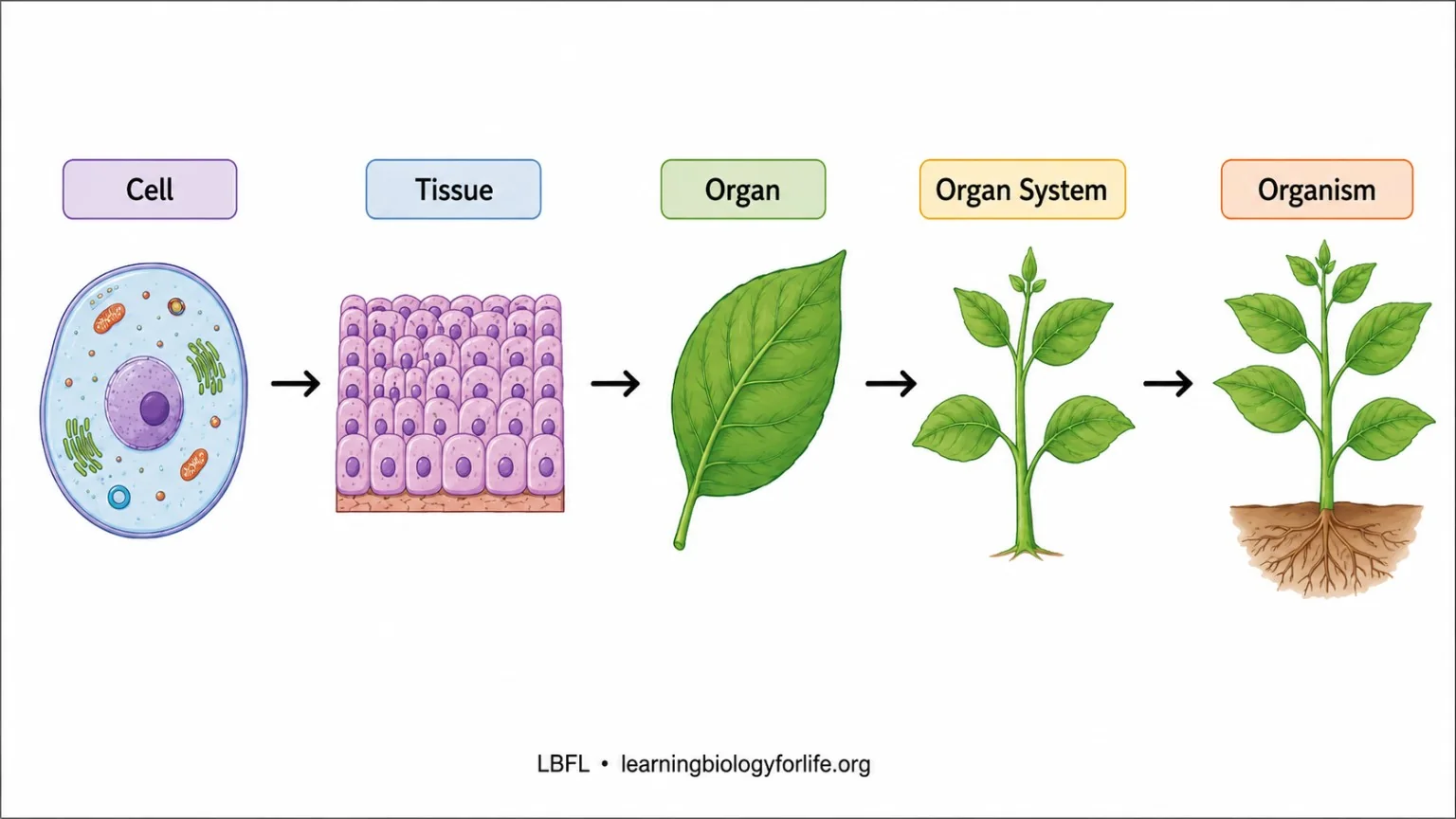
These visuals build the concept from basic cell structure to protoplasm, cell theory, unicellular and multicellular organization, and organism-level hierarchy.
Educational Boundary
This lesson is prepared for academic biology learning and HSC Biology preparation. The language is simplified, but the biological meaning is kept accurate. Students should still follow their textbook, teacher and institutional guideline for syllabus-specific wording.
Main Lesson Body
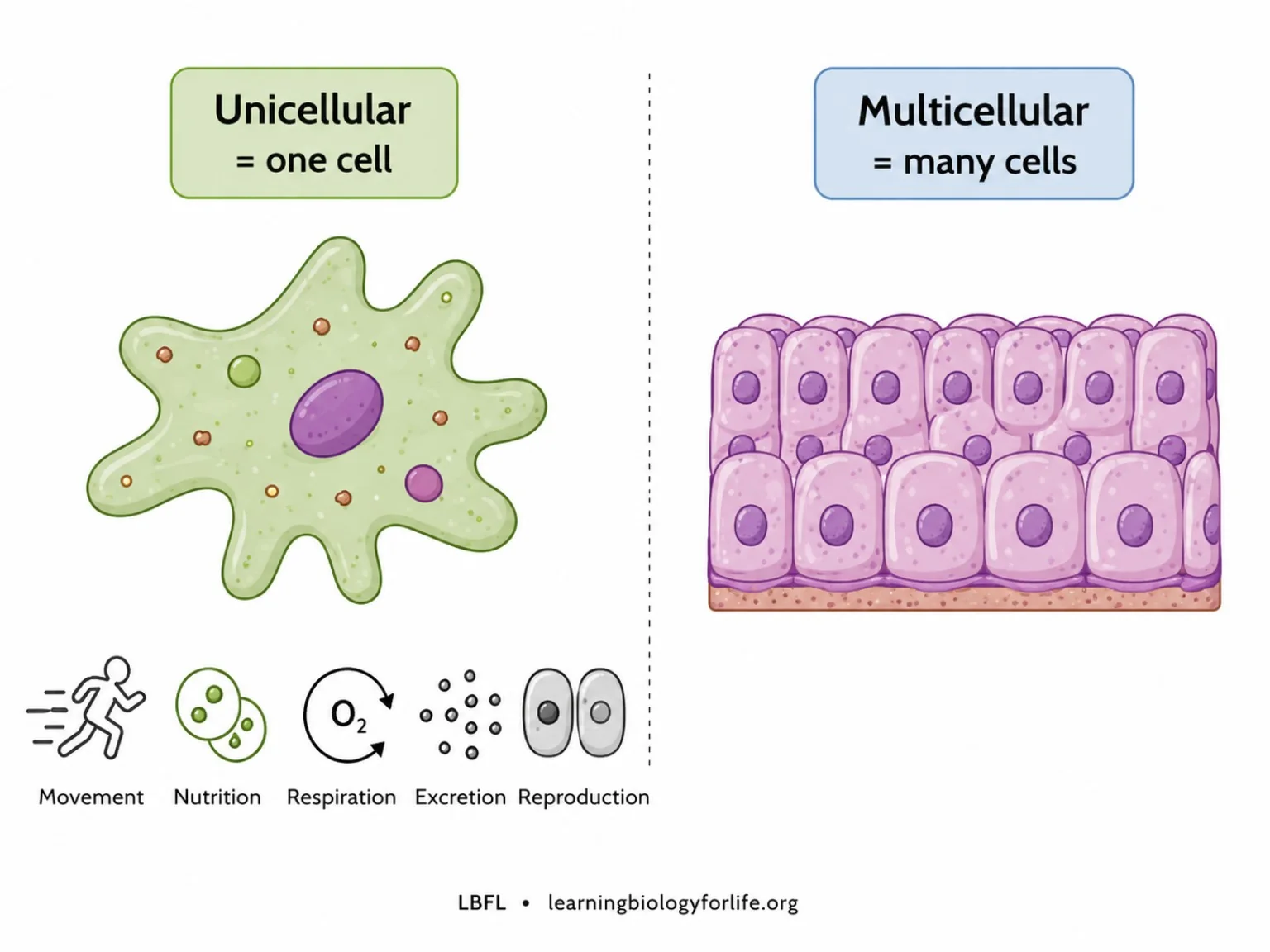
Cells are the basic structural and functional units of life. Every cellular organism is made of one or more cells. A unicellular organism performs all life activities within one cell, while a multicellular organism depends on many specialized cells working together.
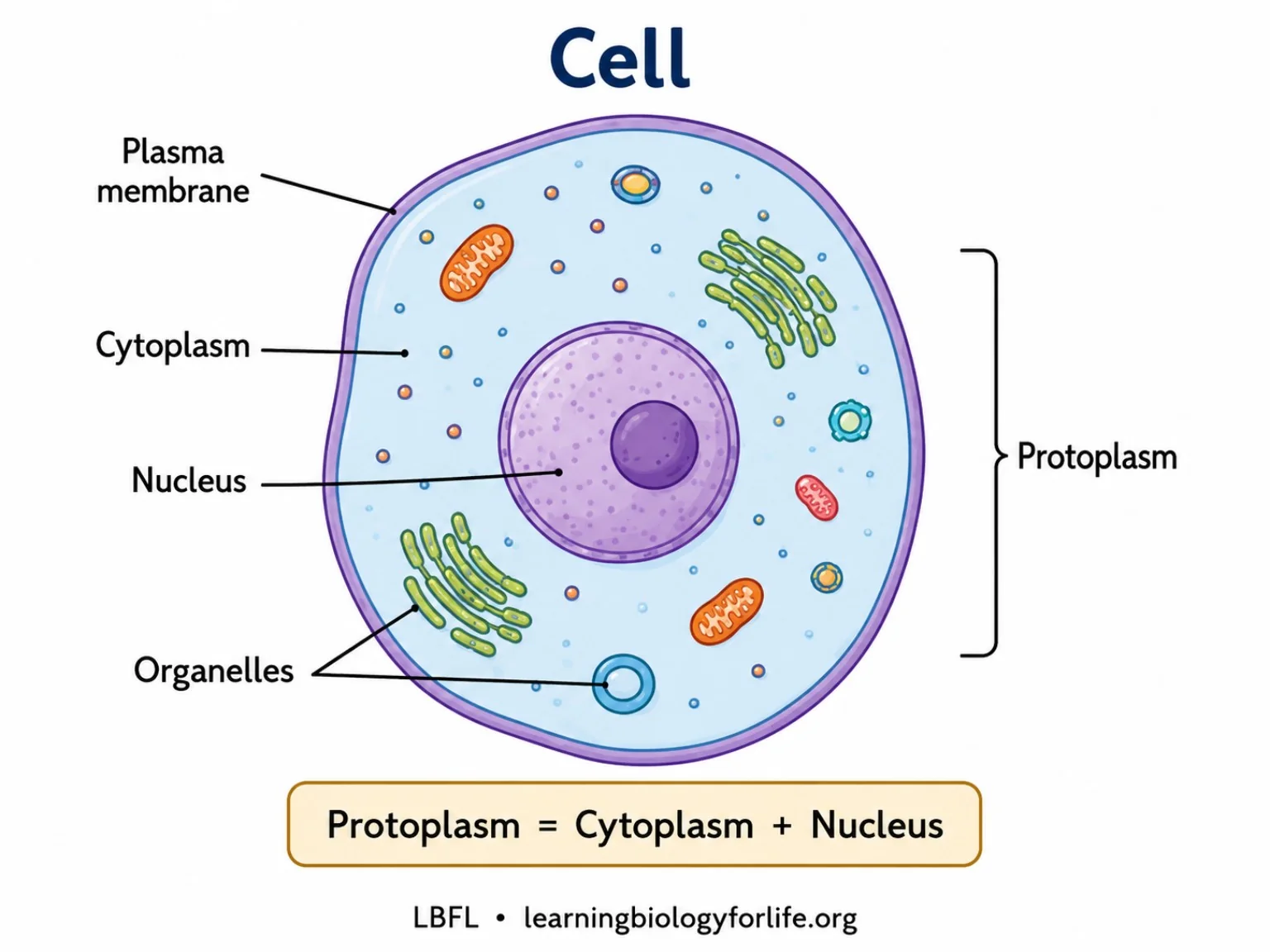
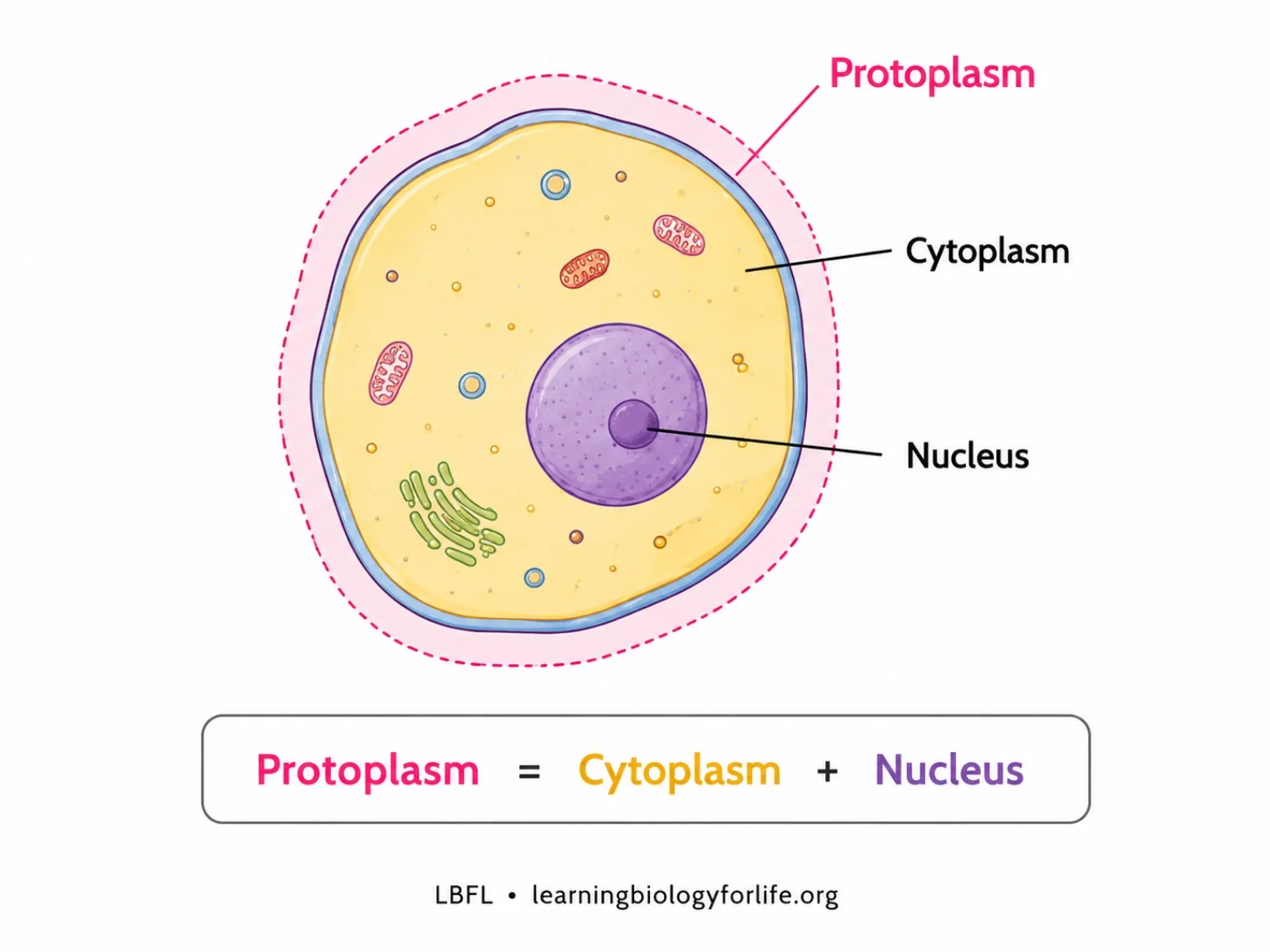
The living substance inside the cell is called protoplasm. In HSC Biology, protoplasm is usually explained as the living part of the cell that includes cytoplasm and nucleus. Cytoplasm is the region between the plasma membrane and the nucleus. The nucleus stores genetic information and helps control cell activities.
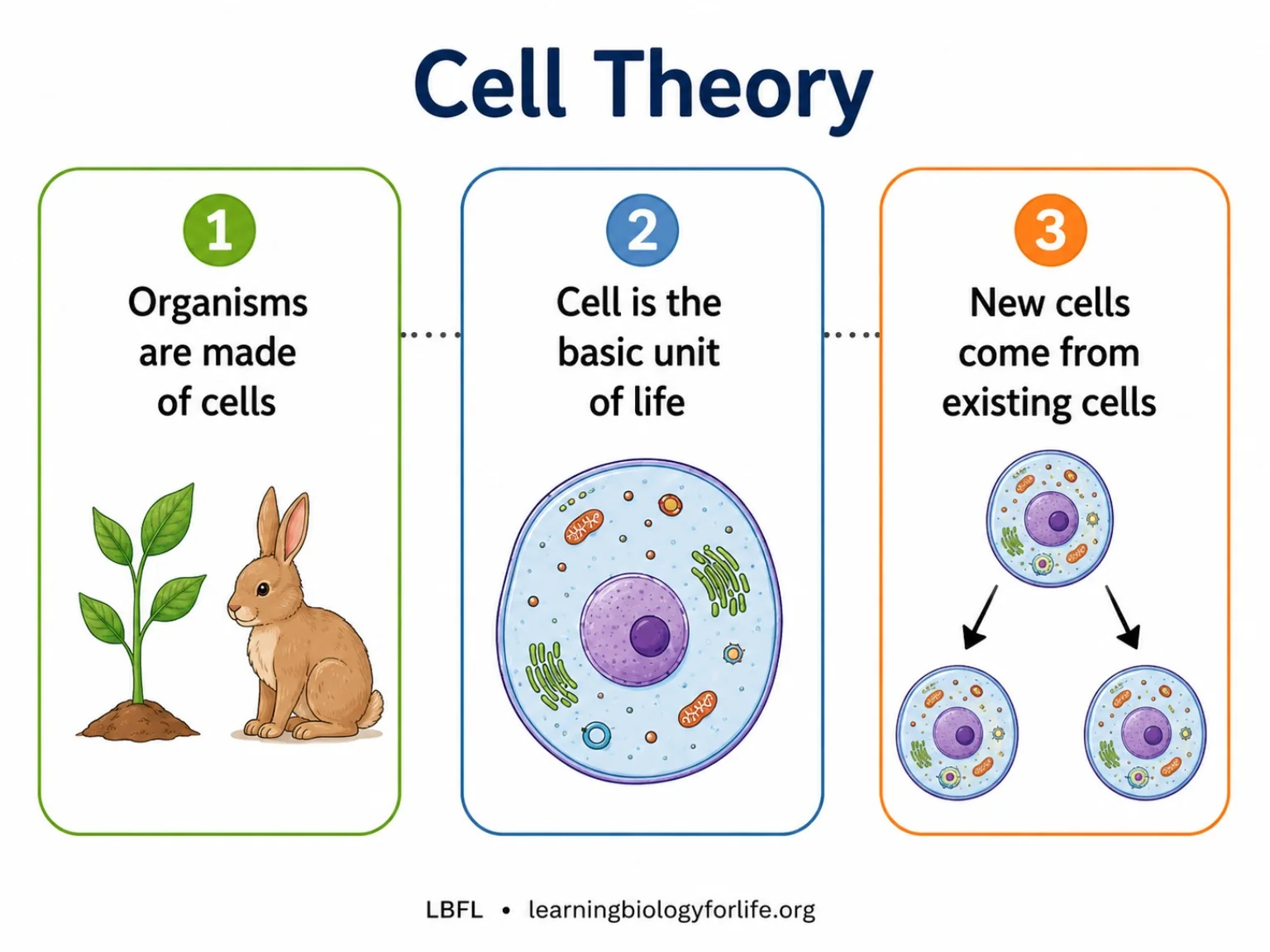
Cell theory explains the cellular foundation of life. Its major statements are: all living cellular organisms are made of one or more cells; the cell is the basic structural and functional unit of life; and new cells arise from pre-existing cells.
Glossary
Learning Objectives
- Define cell in simple biological language.
- Explain why the cell is called the structural and functional unit of life.
- Distinguish between protoplasm and cytoplasm.
- State the major points of cell theory.
- Differentiate between unicellular and multicellular organisms.
Learning Outcomes
- Students can explain cell as the basic unit of life.
- Students can explain protoplasm = cytoplasm + nucleus.
- Students can state the three major statements of cell theory.
- Students can explain how Amoeba performs life activities as a unicellular organism.
DOT — Concept Clarity
A cell is the basic structural and functional unit of life. “Structural unit” means living bodies are built from cells. “Functional unit” means basic life activities occur through cells.
Protoplasm is the living substance of the cell. At HSC level, it is commonly explained as cytoplasm plus nucleus.
Core formula: Protoplasm = Cytoplasm + Nucleus
The major statements of cell theory are: all cellular organisms are made of one or more cells; the cell is the basic unit of life; new cells arise from pre-existing cells.
LINE — Application and Connection
Cell theory connects nearly every later topic in biology. Tissues are groups of similar cells; organs are organized groups of tissues; genetics studies hereditary information stored in cells; and cell division explains how new cells arise.
The idea of protoplasm prevents students from thinking of the cell as an empty box. A cell contains living material, chemical reactions, genetic information, organelles, membranes and energy systems.
CIRCLE — Life Connection
The cell teaches that large living systems are built from small organized units. Learning also begins with small clear concepts. One clear concept becomes a DOT; connected concepts become a LINE; repeated understanding becomes a CIRCLE.
Deep Thinking Box
Do not ask only: What is a cell?
Ask also: Why can one cell be alive?
A cell is alive because it has organization, boundary, chemical activity, genetic information and the ability to respond.
Concept Table
| Term | Simple meaning | Deeper meaning |
|---|---|---|
| Cell | Basic unit of life | Smallest organized living system |
| Protoplasm | Living substance | Active internal material of the cell |
| Cytoplasm | Region outside nucleus | Main working area of the cell |
| Nucleus | Control center | Stores genetic information |
| Cell Theory | Theory of cellular life | Explains unity, growth and continuity |
Protoplasm vs Cytoplasm
| Feature | Protoplasm | Cytoplasm |
|---|---|---|
| Basic meaning | Living substance of the cell | Cell region outside the nucleus |
| Includes | Cytoplasm and nucleus | Cytosol, organelles and dissolved substances |
| Scope | Broader | Narrower |
| Beginner formula | Protoplasm = cytoplasm + nucleus | Cytoplasm = part outside nucleus |
Common Mistakes
Cell, Protoplasm and Cell Theory MCQ Practice
Interactive Practice
1. What is the basic structural and functional unit of life?
2. Protoplasm is best described as:
3. Cytoplasm is located:
Cell, Protoplasm and Cell Theory CQ Practice
CQ Stimulus
A student observed Amoeba under a microscope. The teacher explained that Amoeba is made of only one cell, yet it can move, take food, respire, excrete and reproduce. Later, the same student observed plant tissue and found many cells arranged together.
Questions
a. What is a cell?
b. Why is protoplasm called the living substance of the cell?
c. Explain how Amoeba performs life activities as a unicellular organism.
d. Analyze why cell theory is important for understanding multicellular organisms.
Model Answer
a. A cell is the basic structural and functional unit of life.
b. Protoplasm is called the living substance because it contains active living material needed for cellular activities. At HSC level, it includes cytoplasm and nucleus.
c. Amoeba is unicellular. Its single cell performs movement, nutrition, respiration, excretion and reproduction. The cytoplasm supports internal reactions, the plasma membrane controls exchange, and the nucleus controls activities.
d. Cell theory shows that multicellular organisms are built from cells. Specialized cells form tissues, tissues form organs, and organs form organ systems. Thus the foundation of a large body is cellular organization.
References
- Standard HSC Biology textbook discussion on cell, protoplasm and cell theory.
- Standard cell biology references.
- General historical references on cell theory and protoplasm.
- LBFL original educational diagram.