Lecture 06: Mitochondria — Powerhouse of the Cell
শিক্ষামূলক নোট: এই পৃষ্ঠা একাডেমিক জীববিজ্ঞান শেখা ও পরীক্ষার প্রস্তুতির সহায়ক।
Mitochondria: Powerhouse of the Cell
This English mirror explains mitochondrial structure, ATP production, cristae, matrix, mitochondrial DNA and cellular energy management for HSC Botany learners.
Lesson Summary
Mitochondria are energy-producing organelles of eukaryotic cells. They help convert chemical energy from food molecules into ATP, the usable energy molecule of the cell. For this reason, mitochondria are called the powerhouse of the cell.
Visual Learning Route
These visuals explain mitochondrial structure, cristae, ATP production and why high-energy cells contain more mitochondria.
Educational Boundary
This lesson is prepared for academic biology learning and HSC Biology preparation. The language is simplified, but the biological meaning is kept accurate. Students should still follow their textbook, teacher and institutional guideline for syllabus-specific wording.
Main Lesson Body
Mitochondria are small organelles inside eukaryotic cells that help produce ATP. ATP is the usable energy molecule of the cell. Activities such as movement, transport, growth, repair, muscle contraction and cell division depend on ATP.
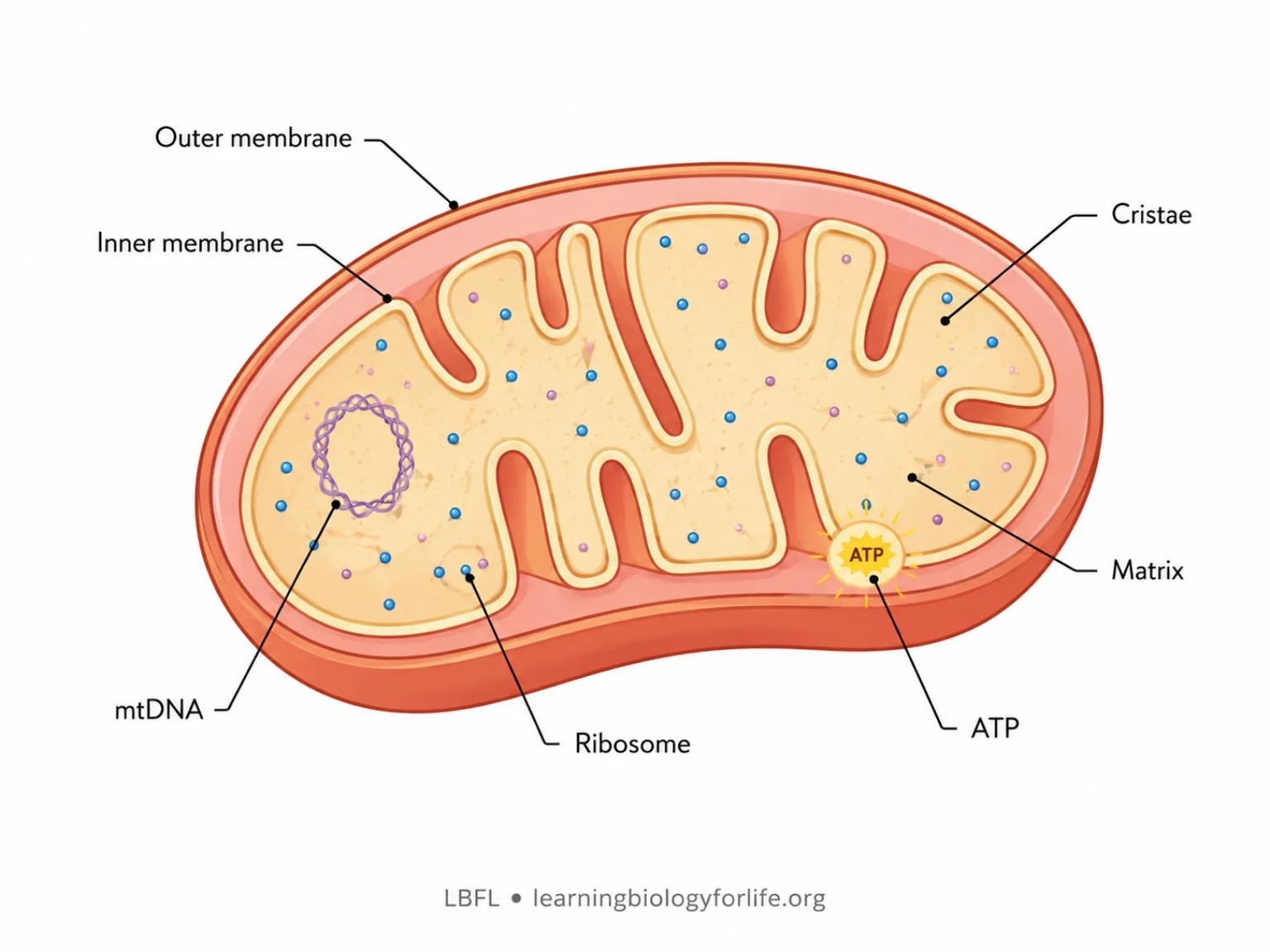
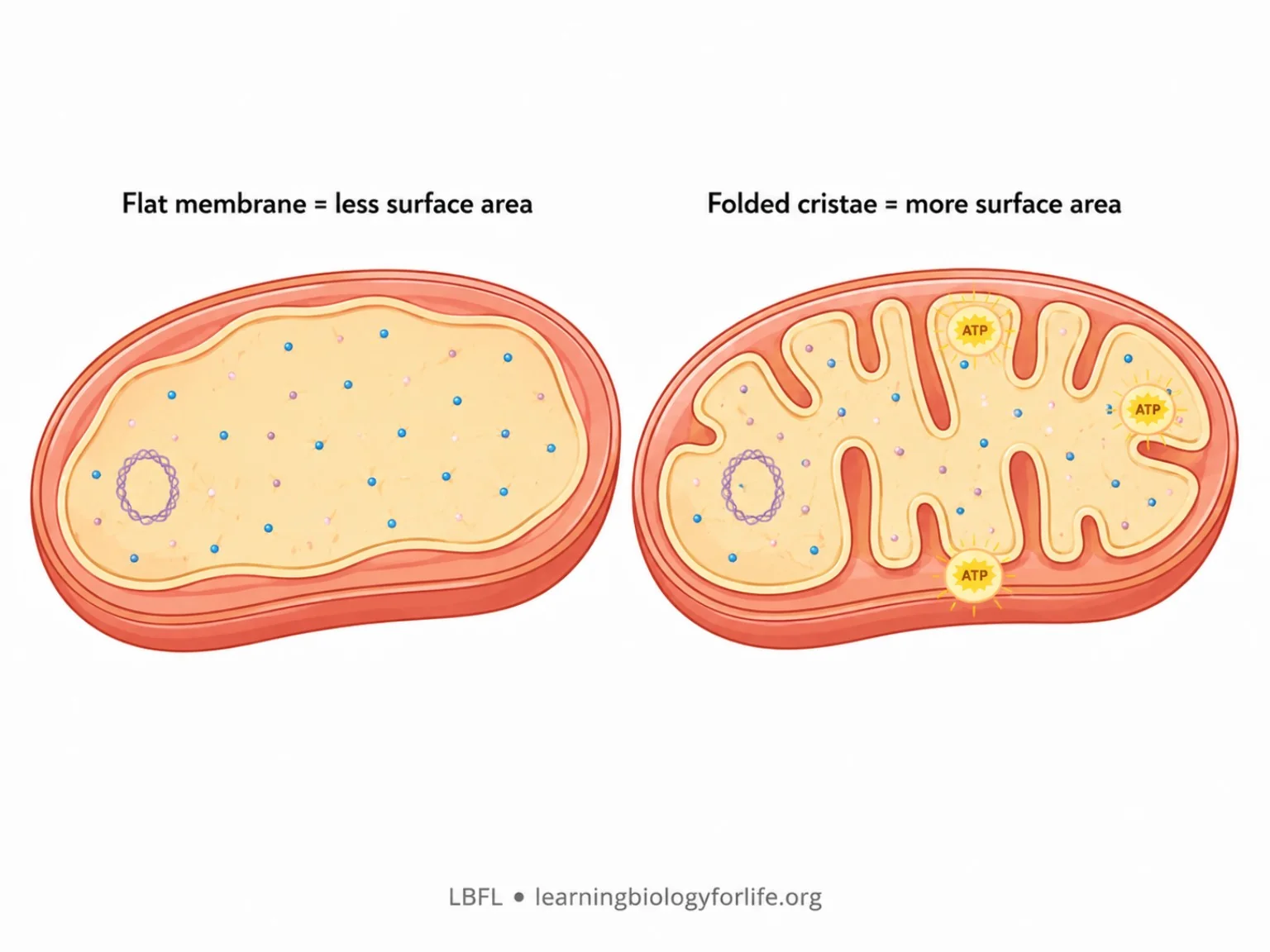
A mitochondrion has two membranes. The outer membrane surrounds the organelle. The inner membrane forms folds called cristae. These folds increase the surface area for reactions related to ATP production. The inner fluid-filled region is called the matrix. Mitochondria also contain their own small DNA.
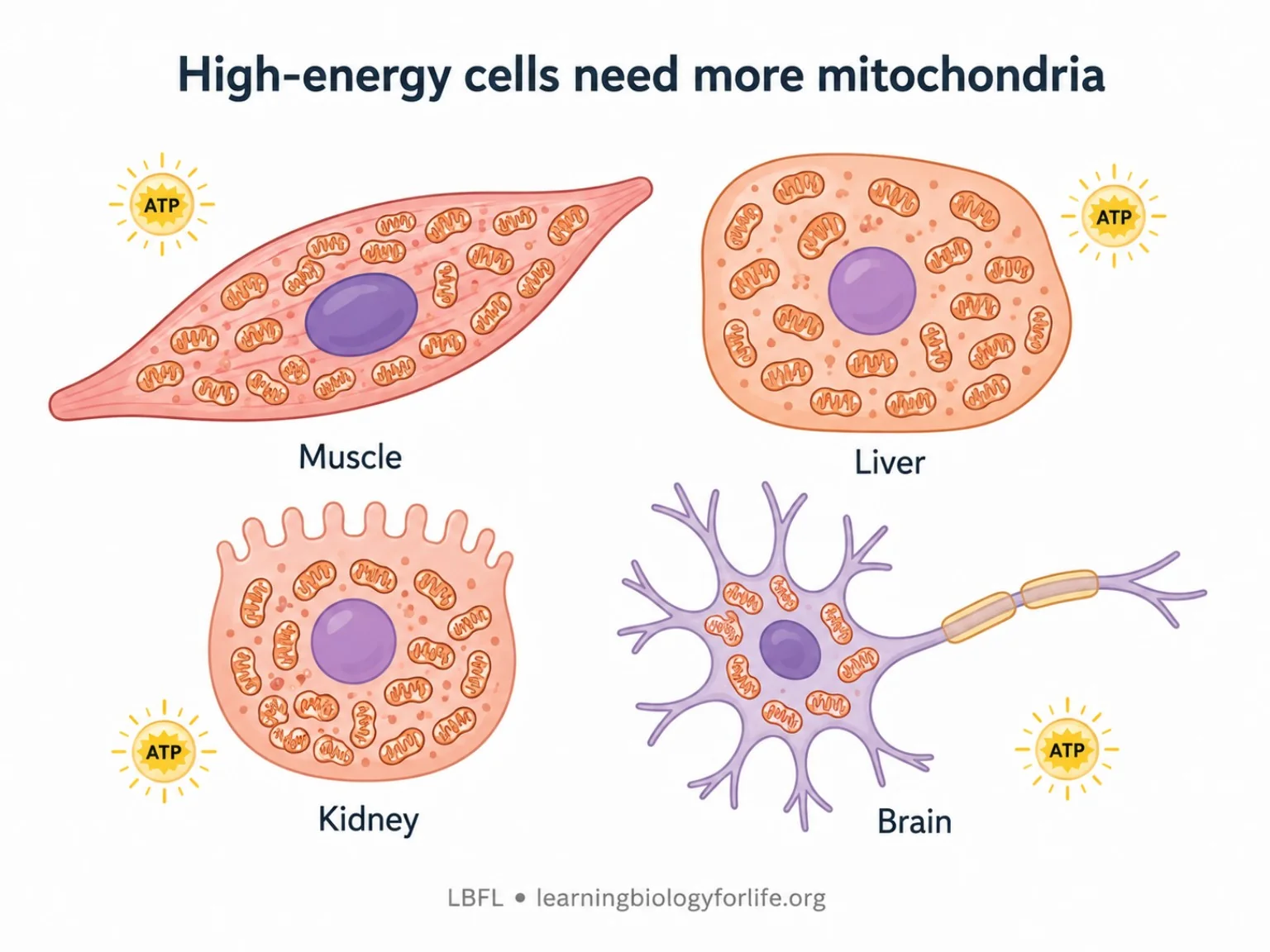
Cells that need more energy usually contain more mitochondria. For example, muscle cells, liver cells, kidney cells and brain cells depend strongly on mitochondrial activity.
Glossary
Beginner note: one organelle = mitochondrion; many organelles = mitochondria.
Learning Objectives
- Define mitochondria in simple biological language.
- Explain why mitochondria are called the powerhouse of the cell.
- Identify outer membrane, inner membrane, cristae, matrix and mitochondrial DNA.
- Describe the role of ATP in cellular activities.
- Relate mitochondria with high-energy cells such as muscle, liver, kidney and brain cells.
Learning Outcomes
- Students can describe mitochondria as energy-producing organelles.
- Students can explain the relationship between mitochondria and ATP.
- Students can identify the main parts of a mitochondrion from a diagram.
- Students can explain why cristae increase functional surface area.
Learning Activities
- Observe a labelled diagram of a mitochondrion.
- Write the difference between mitochondrion and mitochondria.
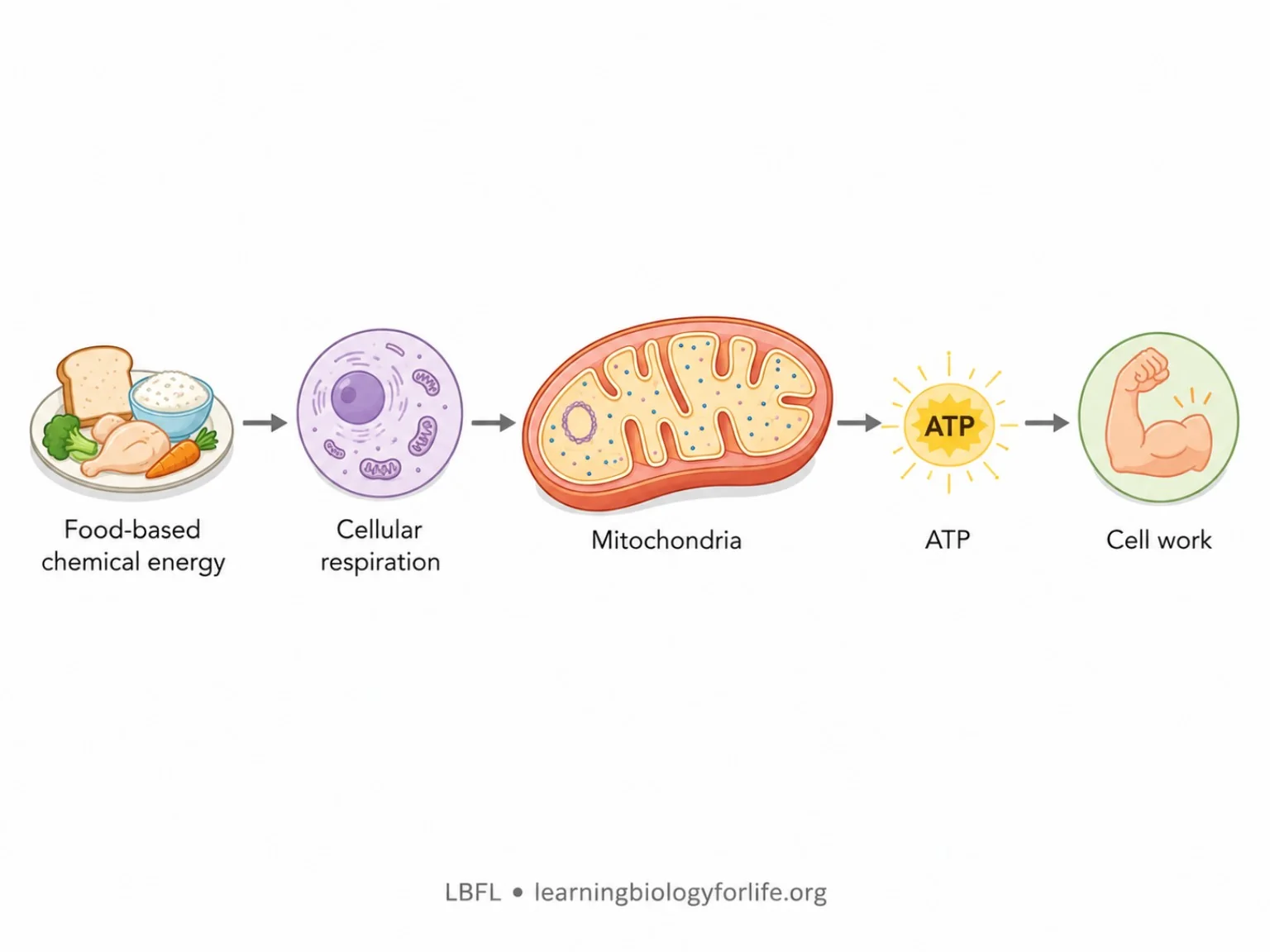
- Draw the flowchart: Food molecule → Cellular respiration → ATP → Cell work.
- Explain why muscle cells contain many mitochondria.
DOT — Concept Clarity
Mitochondria are membrane-bound organelles found in most eukaryotic cells. They help produce ATP, so they are called the powerhouse of the cell. ATP is the energy molecule that the cell can directly use for work.
The inner mitochondrial membrane folds into cristae. Cristae increase the surface area of the inner membrane. This supports reactions related to ATP production more efficiently.
Core formula: Mitochondria → Cellular respiration → ATP → Cell activities
LINE — Application and Connection
Food molecules contain chemical energy, but the cell cannot use that energy directly. The cell needs ATP. Mitochondria help convert food-based chemical energy into ATP.
Muscle cells need ATP for contraction, liver cells for chemical processing, kidney cells for transport-related activities, and brain cells for nerve signaling. Therefore, these high-energy cells usually contain many mitochondria.
CIRCLE — Life Connection
Mitochondria teach that life does not run on materials alone; it needs organized energy management. In learning, books and notes are not enough; information must be converted into usable understanding.
Concept Table
| Term | Simple meaning | HSC importance |
|---|---|---|
| Mitochondria | Energy-producing organelles | Help produce ATP |
| Mitochondrion | One mitochondrial organelle | Singular form |
| ATP | Usable energy molecule | Powers cell activities |
| Cristae | Folds of inner membrane | Increase surface area |
| Matrix | Inner fluid-filled space | Contains enzymes, mtDNA and ribosomes |
Why Powerhouse?
Mitochondria do not create energy from nothing. They help convert chemical energy stored in food molecules into ATP, the usable energy molecule of the cell.
Common Mistakes
Revision Points
Student Takeaway
Mitochondria are the cell’s energy factories. They help convert food-based chemical energy into ATP, and ATP powers cellular activities.
Teacher Note
Clarify first: mitochondria do not create energy from nothing; they help convert energy into ATP. Then use high-energy examples: muscle cells, liver cells, kidney cells and brain cells.
Explain the grammar early: one = mitochondrion, many = mitochondria.
Mitochondria MCQ Practice
Interactive Practice
1. Mitochondria are mainly known for:
2. A single mitochondria is called:
3. ATP is best described as:
Mitochondria CQ Practice
CQ Stimulus
A student observed a double-membrane organelle. Its inner membrane was folded many times. The teacher said that this organelle helps produce ATP and is abundant in muscle cells.
Questions
a. What are mitochondria?
b. Why are mitochondria called the powerhouse of the cell?
c. Explain the structure of mitochondria based on the stimulus.
d. Analyze why muscle cells contain many mitochondria.
Model Answer
a. Mitochondria are energy-producing organelles found in most eukaryotic cells.
b. Mitochondria help produce ATP. ATP provides usable energy for cellular activities. Therefore, mitochondria are called the powerhouse of the cell.
c. A mitochondrion has an outer membrane and an inner membrane. The inner membrane folds into cristae, which increase surface area. The matrix contains enzymes, mitochondrial DNA and ribosomes.
d. Muscle cells need a large amount of ATP for contraction. Since mitochondria help produce ATP, muscle cells usually contain many mitochondria.
References
- National Human Genome Research Institute: Mitochondria genetics glossary.
- NCBI Bookshelf: The Mitochondrion, Molecular Biology of the Cell.
- NCBI Bookshelf: Mitochondria, The Cell.
- Standard HSC Biology textbook discussion on mitochondria.
- LBFL original educational diagram.